Wednesday, May 30, 2012

HERvotes Blog Carnival: It’s Time to Pass the Paycheck Fairness Act!

By Fatima Goss Graves, Vice President for Education and Employment at the National Women’s Law Center

For this 14th #HERvotes blog carnival, we’re blogging about equal pay and the need for the Paycheck Fairness Act – which will be on the Senate floor for a vote next week.

Why do we need the Paycheck Fairness Act (PFA)? It would update the 50-year-old law by providing incentives to employers to pay women fairly. It also would ban employers from retaliating against their employees who choose to share salary information with their coworkers.

It’s time for Congress to stand up for the rights of working women and to advance fair pay! The PFA is pending in the 112th Congress, with a vote expected in the Senate on June 5. It has twice passed the House, and it fell just two votes short of a Senate vote on its merits in the last Congress. This is a commonsense bill that would help women and their families – especially in this tough economy.

So please join us in supporting the PFA today! Start by calling you Senators today and urge them to vote for it. After you’ve called, read and share the blog posts below. We’ll be tweeting about this blog carnival all day with the hashtag #HERvotes and we encourage you to join us!

#HERvotes, a multi-organization campaign launched in August 2011, advocates women using our voices and votes to stop the attacks on the women’s movement’s major advances, many of which are at risk in the next election.

Part of the
#HERvotes blog carnival.


Read More:
I Didn't Get Equal Pay. You Should- Lilly Ledbetter, via AAUW
Advancing Paycheck Fairness for Latinas means Advancing Immigrant and Reproductive Rights- Natalie D. Camastra, National Latina Institute for Reproductive Health
Restoring Some Reality to the Paycheck Fairness Debate- Fatima Goss Graves, National Women's Law Center
Paycheck Fairness Makes the Political Personal- Alison Channon, National Women's Law Center
Closing the Wage Gap Is About Fairness, Not Magic!- Samantha Lint, National Women's Law Center
NASW Supports the Paycheck Fairness Act- National Association of Social Workers
If Our College Graduates Can’t Fight For Fair Pay, Who Can? (PDF) - Jamie Dolkas, Equal Rights Advocates
Salary Negotiation, Powerful Women and the Wage Gap- Katherine Birdsall, Feminist Majority Foundation
Raise the Minimum Wage and Narrow the Wage Gap- Abby Lane, National Women's Law Center
Paycheck Fairness Does Not Have to be an Oxymoron- Malak Yusuf, Wider Opportunities for Women
America’s Women and Families Deserve a Vote on the Paycheck Fairness Act- Sarah Crawford, National Partnership for Women & Families
The Facts Behind the Call for Equal Pay- Christine Miranda, NOW
Families, the Wage Gap, and the Economy- Caitlin Highland, Feminist Majority Foundation
Stimulate the Economy: Pay Women Fairly- Linda Meric, 9to5, National Association of Working Women
HERvotes Blog Carnival: Equal Pay and the Single Woman- Elisabeth Gehl, Business and Professional Women’s Foundation
The Wage Gap: Collective Change, Not Choice- Maggie Fridinger, National Council of Women's Organizations
The Paycheck Fairness Act: Telling the Truth About Workforce Equality - Dani Nispel, National Council of Women's Organizations
Paycheck Equality: It’s Not a Suggestion, It’s the Law- Anny Bolgiano, Coalition of Labor Union Women
Women of Color, the Wage Gap and the Paycheck Fairness Act- Katherine Birdsall, Feminist Majority Foundation
A Jewish Call for Equal Pay- Ian Hainline & Katharine Nasielski, Religious Action Center of Reform Judaism
Justice for Working Women- Miri Cypers, Jewish Women International
The Paycheck Fairness Act: For When Women are Old and Broke- Kate McGuinness, Fem2.0
The Relationship Between Unequal Pay and Other Forms of Gender Discrimination- Debra Miller, Feminist Majority Foundation

Thursday, May 17, 2012

HERvotes Blog Carnival: National Women’s Health Week

By Cindy Pearson, co-founder of Raising Women’s Voices for the Health Care We Need

For the 13th #HERvotes blog carnival, we’re celebrating National Women’s Health Week. The federal government launched National Women’s Health Week ten years ago in an effort to improve women’s health by building awareness about things like exercise, healthy eating and the importance of regular check-ups.

It’s nice to have our government speaking out about the importance of our health, but we know that it takes more than just awareness to insure that all women are healthy. It takes access to high quality affordable health care services. For too many women, health care hasn’t been affordable, especially reproductive health services. That’s starting to change, thanks to the new health law. This week’s #HERvotes blog carnival will focus on the importance of the preventive well-woman services of the Affordable Care Act.

You may already know that the Affordable Care Act requires new health plans to cover contraceptive counseling and methods without any co-payments. But did you know that plans will also be required to cover breast feeding supplies? And screening for domestic violence? These are just a few of the new preventive services that will be covered for women starting later this year.

The #HERvotes blog carnival will feature stories about how real women and their families are already benefiting from the new women’s health services and information on new parts of the Affordable Care Act that will be implemented in August 2012.

You can participate by telling your own story and by sharing the posts below on Facebook, Twitter (using the hashtag #HERvotes) and other social media.

Part of the #HERvotes blog carnival.

Read More:

New Reasons to Celebrate Women’s Health Week- Beth Scott, American Association of University Women

Who’s Afraid of the Ob/Gyn? Lack of Communication Between Women and their Doctors- Dani Nispel, Program and Policy Intern, National Council of Women’s Organizations

National Women’s Health Week: Pledging to Take Care of Ourselves- Ann Rose Greenberg, Marketing Coordinator, Jewish Women International

Celebrating Women’s Health Week as a Grandmother- Nancy K. Kaufman, CEO, National Council of Jewish Women

Get your women’s health checkup today. It’s covered!- Lois Uttley, Co-Founder, Raising Women’s Voices for the Health Care We Need

League Recognizes National Women’s Health Week- Stephanie, League of Women Voters

#HERvotes, a multi-organization campaign launched in August 2011, advocates women using our voices and votes to stop the attacks on the major advances of the women’s movement, many of which are at risk in the next election.

Monday, April 23, 2012

HERvotes Blog Carnival: Tell Congress to Reauthorize VAWA

by Eleanor Smeal, Feminist Majority Foundation

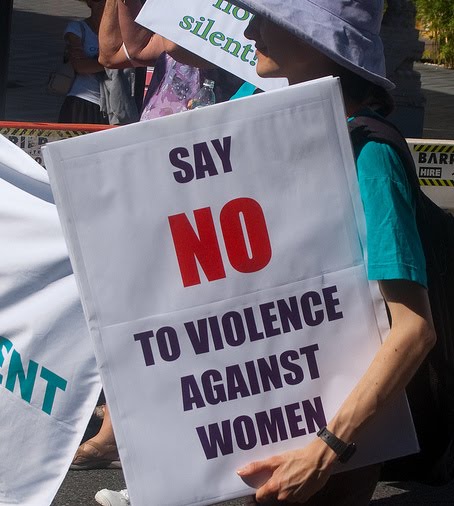
For the eleventh #HERvotes blog carnival, we’re joining together to urge the Reauthorization of the Violence Against Women Act (VAWA).

Domestic violence results in over two million injuries every year. Three women die every day in the United States as the result of domestic violence. Since the passage of VAWA in 1994, the rate of intimate partner violence has declined by 67%. VAWA provides services to victims of violence and has improved the criminal justice response to violence against women.

VAWA expired December 31, 2011. Finally, the Senate Judiciary Committee voted in February to move VAWA to the Senate floor. But the Senate committee vote was strictly on party lines – 10 Democratic members voting yes and 8 Republicans voting no.

Now the VAWA Reauthorization will finally be voted on this week by the whole Senate. Currently, 61 Senators (53 Democrats and 8 Republicans) are co-sponsoring the Reauthorization. HERvotes is urging all Senators to vote yes. Eliminating violence against women is not… must not… be a partisan issue.

HERvotes urges Congress to reauthorize this landmark legislation and extend VAWA’s lifesaving programs and services for another five years.

Join us by sharing the posts below on Facebook, Twitter (using the hashtag #HERvotes), and other social media.

Part of the #HERvotes blog carnival.

Read More:
Strengthening the Violence Against Women Act- Lynn Rosenthal, White House Advisor on Violence Against Women
Why the Violence Against Women Act Impacts College Women- Francesca Witcher, Feminist Majority Foundation
Group Opposes VAWA Because Act Helps Lesbians -Ben Atherton-Zeman, Ms.
Why is the U.S. Senate is Playing Politics with Violence Against Women?- Gloria Lau, YWCA USA
The Violence Against Women Act: Fact vs. Fiction- Miri Cypers, Jewish Women International
The Struggle to End Violence Against Women Encounters a Road Block-Nancy K. Kaufman, National Council of Jewish Women
Newsweek Glamorizes Women's Submission-Lisa Bennett, NOW
Congress Rocking Back the Clock for Women- Janet Hill, Coalition of Labor Union Women
VAWA Reauthorization and Economic Security for Survivors- Sarah Gonzalez Bocinski, Wider Opportunities for Women

Read our Previous Posts:
A Critical Tool to Save Lives: VAWA -Wm. T. (Bill) Robinson III, American Bar Association
Violence Is a Cycle: We Must Reauthorize VAWA -John Roach, Break the Cycle
Calling for the Reauthorization of VAWA- Brandi Callaghan, Feminist Majority Foundation
Immigration, Intimate Partner Violence, and the Violence Against Women Act -Anjela Jenkins, Law Students for Reproductive Justice Fellow, blogging for the National Latina Institute for Reproductive Health
Teen Dating Violence -Christine Bork, YWCA Metropolitan Chicago
Hey Congress, How About Giving Half the Population Some Love? -Janet Hill, Coalition of Labor Union Women
“It’s a Good Time To Be a Black Woman? Well, Not So Good When It Comes To Violence”- Angela Sutton, Black Women’s Health Imperative
Combating Domestic Violence: A Call to Reauthorize VAWA- Mallen Urso, National Women’s Political Caucus
Taking the Violence Against Women Act to Higher Ground- Emily Alfano, NCJW
Tell Your Senator to Reauthorize the Violence Against Women Act Now- Elizabeth Owens, AAUW
Why VAWA is a Queer Issue- Terra Slavin, L.A. Gay and Lesbian Center and Sharon Stapel, New York City Anti-Violence Project
Universities Should Support VAWA- Melissa Siegel, loveisrespect.org National Youth Advisory Board
Students Against Dating/Domestic Abuse- Sara Skavroneck, loveisrespect.org National Youth Advisory Board
Loveisrespect.org- National Youth Advisory Board Against Dating Violence- Kevin Mauro, loveisrespect.org National Youth Advisory Board
Teenage Dating Violence and VAWA- Nikki Desario, loveisrespect.org National Youth Advisory Board
Joining Forces – Women Veterans Speak Out: The Trenches, Remembered- Joan Grey, Business and Professional Women’s Foundation
Violence Against Women Act up for Reauthorization- National Association of Social Workers
Wake up, People! Domestic Violence is an Epidemic!- Donna Pantry, Elf Lady’s Chronicles
Recession and Women: How Economic Insecurity Enables Abuse- Donna Addkison’s, Wider Opportunities for Women (WOW)
More Bipartisan Support Needed for Violence Against Women Act- Terry O’Neill, Say It Sister- NOW’s Blog for Equality

Tuesday, March 20, 2012

HERvotes Blog Carnival: What Health-Care Reform Means to Women

By Cindy Pearson, co-founder of Raising Women’s Voices for the Health Care We Need

For the tenth #HERvotes blog carnival, we’re celebrating the second anniversary of the new health-reform law, the Affordable Care Act, or ACA.

Why are women so excited about the ACA? Well, for a start, the law has already started removing barriers to health care and improving services for millions of women and our families, helping us access the care we need to stay healthy.

This week’s #HERvotes blog carnival is going to raise women’s voices all across the country. We will tell our stories of how the Affordable Care Act has helped us, what is still wrong with our health care system and what we’re doing to make a difference. We will express our anger about the insurance company abuses–such as charging us more than men for our health insurance–that will continue until the ACA is fully implemented. And perhaps most importantly, we’ll share why this important advance for women should be upheld by the Supreme Court when it takes up the Affordable Care Act next week.

Please join us in lifting our voices–because we all have something to gain from the Affordable Care Act.

You can participate by telling your own story and by sharing the posts below on Facebook, Twitter (using the hashtag #HERvotes) and other social media.

#HERvotes, a multi-organization campaign launched in August 2011, advocates women using our voices and votes to stop the attacks on the women’s movement’s major advances, many of which are at risk in the next election.


Read more:
As ACA Faces a Supreme Court Challenge, Who Is at Stake?- Shivana Jorawar, NAPAWF
Stand Up For Health Care Tumblr- NARAL Pro-Choice America
10 Things to LOVE About the Affordable Care Act- Debra Ness, National Partnership for Women and Families
Celebrate Second Anniversary of Affordable Care Act- Family Values @ Work
The Affordable Care Act: Hope for Health Care Equality For All- Jessica Gonzalez-Rojas, National Latina Institute for Reproductive Health via RHRealityCheck
Health Insurance Access for Young Latina Adults - National Latina Institute for Reproductive Health
Health Reform to Expand Reach of Community Health Centers- National Latina Institute for Reproductive Health
No Co-pay for Pregnancy Care is Good for Latina Moms and Babies - National Latina Institute for Reproductive Health
Medicaid to Service 6 Million More
- National Latina Institute for Reproductive Health
Prevention Saves Latinas' Lives
- National Latina Institute for Reproductive Health
Insurance protections for Latinas' with Pre-Existing Conditions
- National Latina Institute for Reproductive Health
Cervical Cancer Prevention for Latinas -
National Latina Institute for Reproductive Health
No Co-Pays for STI/HIV Testing
- National Latina Institute for Reproductive Health
Showing love for women, mothers and Babies -
National Latina Institute for Reproductive Health
The Affordable Care Act Turns 2 – No Baby Step for Women- Gloria Lau, YWCA USA
Why It's Time for Women's Rights- Sophia Yen and Ellen Shaffer, Trust Women/Silver Ribbon Campaign
20 Million Women and Counting ...Two Years of the Affordable Care Act- Jacqueline M., Planned Parenthood Action Fund
Thank you, ACA: Protecting Our Country’s Well-being by Protecting Students- Andrea Alajbegovic, National Women's Law Center
New Options for Those with Chronic Illness- Dania Palanker, National Women's Law Center
Affordable Care Act: A Necessity for Women's Health- Katharine Nasielski, Religious Action Center for Reform Judaism
How the ACA is Helping My Family- Sarah Robinson, National Women's Law Center
The Limbo of a College Graduate- Brittany Papalia, National Women's Law Center
Preventative Care: Protect the Affordable Care Act- Mallen Urso, National Women's Political Caucus
Why I Support the Health Care Law- Amy Cotton, National Council of Jewish Women
Where Would Women be Today without the Landmark Programs that were Enacted Over the Last 45 Years to Protect and Advance Women’s Health?- Raising Women's Voices
The Impact of the Affordable Care Act on One Young Woman- Lindsay Yancich, NOW
Why We Need the Affordable Care Act- Julie Seger, AAUW
Healthcare Stories the Supreme Court Needs to Read- Nancy Keenan, NARAL Pro-Choice America
Today's Story on How Health Reform Helps Women- NARAL's Blog for Choice
HERvotes Blog Carnival: Gen Y Women Benefit from the Affordable Health Care Act- Business and Professional Women's Foundation
Celebrating the 2nd Anniversary of the Affordable Care Act!- Kristin Rowe-Finkbeiner, MomsRising
2 Year Anniversary of the Affordable Care Act-What’s In It for Young People?- Sarah Audelo, Advocates for Youth
The Affordable Care Act and Women’s Health- National Association of Social Workers
Health Reform: Winning for Women- Tara Mancini, WIN's Women’s Health Policy Network
Two Years Later, Reflections on the Landmark Health Care Law, Miri Cypers, Jewish Women International
Real Stories on Why Health-Care Reform Helps Women,Thomas Dollar, NARAL Pro-Choice America *updated daily*

Photo of Barack Obama signing the Affordable Care Act on March 23, 2010, from Wikimedia Commons.

Two Years Later, Reflections on the Landmark Health Care Law

by Miri Cypers, JWI Senior Policy and Advocacy Specialist


Two years ago this week, Congress voted in support of the Patient Protection and Affordable Care Act, the landmark health care reform bill, and sent the legislation to President Obama’s desk to sign. This came after months of heated debate in Washington DC and throughout the nation which showcased the complex and often vitriolic nature of the political landscape in the United States. Ultimately, the passage of this historic bill affirmed the right of every American to quality, affordable health coverage and served as an especially important victory for women and their families.
So what gains has the Affordable Care Act made since its passage two years ago? Now, over 20 million women across the U.S. have received preventive health care services, from mammograms to colonoscopies, without co-pays. Soon, this coverage will include other critical preventive health care services, like well-women visits, contraception, and domestic violence screenings- all available without additional costs to women. Now, 2.5 million young adults are insured because of the health care law which allows them to stay on their parents’ insurance plan until the age of 26. Now, nearly 500,000 Americans who were denied coverage have insurance. The list goes on and on.
Women are already benefitting from the ACA and these positive trends will only continue. As women and as activists, we must continue to protect this historic law by dispelling myths and staying informed and active advocates. The health care law is a tremendous achievement for women and their families and despite strong opposition, we will not turn back now.


Cross-posted with Jewish Women International


Part of the #HERvotes blog carnival.

Tuesday, January 31, 2012

HERvotes Blog Carnival: No Religious Exemption for Birth Control Coverage

by Kim Gandy, Feminist Majority Foundation


Despite enormous pressure from the National Conference of Catholic Bishops, the Obama Administration recently decided not to broaden the religious exemption for contraceptive coverage under the Preventive Care package of the Affordable Care Act. This demand for additional exemptions, would have denied millions of American women contraceptive coverage, including students, teachers, nurses, social workers, and other staff (and their families) at religiously-connected or affiliated schools, universities, and hospitals, as well as agencies and institutions like Catholic Charities.


The Catholic Bishops are now leading a backlash against this decision, and women are speaking out. Because of the Affordable Care Act, millions of women who may have been denied access to birth control will now have full access under their health insurance plan, with no co-pays or deductibles, beginning in August 2012. Birth control is the number one prescription drug for women ages 18 to 44 years. Right now, the average woman has to pay up to $50 per month for 30 years for birth control. As a result, many women have had to forgo regular use of birth control and half of US pregnancies are unplanned.


Women of all faiths are employed by hospitals and schools that are owned by religious interests, and they should not be denied equal health care coverage. We urge the Obama Administration to continue to stand strong for women’s health care.


Join us by sharing the posts below on Facebook, Twitter (using the hashtag #HERvotes), and other social media.


Part of the #HERvotes blog carnival.


Take Action:


Join the Feminist Majority Foundation in chastising the Washington Post for repeatedly running editorials attacking the Obama administration’s decision.
Join The National Women's Law Center and Raising Women's Voices in thanking Kathleen Sebelius for making the right decision.
Join UltraViolet in thanking President Obama and Secretary Sebelius.
Thank the Obama administration directly on WhiteHouse.gov.
Join the National Latina Institute for Reproductive Health in telling President Obama you support birth control without co-pays.
Join The National Women's Law Center in telling your senator to reject extreme legislation.
Join The Coalition of Labor Union Women in telling the Senate that you oppose S.2043.


Read More


Sex, Contraception, Motherhood & The Current Madness - Kristin Rowe-Finkbeiner, Mom's Rising

The Long History of the War Against Contraception- Ellen Chesler, New Deal 2.0


Five Big Facts on Birth Control Not Nearly Enough Discussed by Men in the Mainstream Media- Erin Matson, NOW


Congressional Members’ Statements on Contraceptive Coverage Rule Not Based in Fact- Mara Gandal-Powers, National Women's Law Center
Mission Accomplished With Komen: Now It's Time to Save Birth Control Coverage!- Sammie Moshenberg, National Council of Jewish Women
Protect Women's Health: Tell Your Senators to Reject Extreme Legislation- Judy Waxman, National Women's Law Center
I Don’t Use Birth Control, But I Want Access To It- Abigail Collazo, Fem 2.0
This Week’s Attack on Women: Deny Contraceptives! Take Action!!- Carolyn Jacobson and Carol S. Rosenblatt, Coalition of Labor Union Women
Would You Like an Unplanned Pregnancy with that Burrito?- Jen Wang, NARAL's Blog for Choice
HERvotes: Boehner Ups the Threat Against Contraception Coverage- Ms. Blog
Do Republicans Have Sex?- Silver Ribbon Campaign
Major Mainstream Religious Leaders Support White House on Contraceptive Coverage In Health Care Reform- Religious Institute
The Fight Millennials Never Expected: Birth Control- Sarah, Advocates for Youth
An Unholy Alliance Between the Bishops and the Right-Wing Attack Machine- Amy Allina, Raising Women’s Voices for the Health Care We Need, National Women’s Health Network
An Equal & Just World: A Woman’s Right to Control Her Own Reproductive Health- Hannah Sherman, Jewish Women International
Margaret and Helen on the Issues- Margaret and Helen
Religious Freedom in the Crosshairs of Catholic Bishops- Catholics for Choice
Co-Pay for Birth Control? Not Under my Conscience Clause- Bettina Hager, National Women's Political Caucus
Select Media Coverage: Catholics Supporting Contraceptive Coverage Under the ACA- Complied by Catholics for Choice
Seven Things You (and the Media) Need to Know about Birth Control -Jacqueline M., Planned Parenthood Action Fund's Women Are Watching Blog
Obama's contraception exemption puts my patients at risk -Dr. Jennifer H. Tang, Physicians for Reproductive Choice and Health; Letter to the Editor, The Charlotte Observer
Contraception mandate doesn't force use -Bernice Durbin, Letter to the Editor, USA Today
Why All Employers Should Provide Insurance Coverage for Birth Control -Physicians for Reproductive Choice and Health
Delays and Barriers to Accessing BC at Georgetown -Sandra Fluke, Georgetown University Law Students for Reproductive Justice
How to Host a Birth Control Clinic in 3 Easy Steps -Emily T. Wolf, Fordham Law Students for Reproductive Justice
Obama Administration Ensures a Wide Range of Contraceptive Insurance Coverage, Even at Religiously-Affiliated Institutions -Women's Law Project
Birth Control and Government: The Right of Refusal Should Belong to Women -Nancy K. Kaufman, National Council of Jewish Women
Through the Looking Glass on Contraception Coverage -Debra Ness, National Partnership for Women & Families
For the Sisters -Megan Lieff, Religious Coalition for Reproductive Choice
Thank you, Obama, For Standing with ALL Women on Important Health Care Issues -Lacy Langbecker, the Wisconsin Alliance for Women's Health
Birth Control Matters -Nita Chaudhary and Shaunna Thomas, UltraViolet
Would you let someone make your contraceptive decisions for you? Didn’t think so -Mara Gandal-Powers, National Women’s Law Center
The Highs and Lows on Birth Control Access Coverage -Stephanie Drahan, National Women’s Law Center
Hey Media: It’s about the Health of Women and Families -Leila Abolfazli, National Women’s Law Center
Women of Childbearing Age: Take Your Talents Elsewhere -Jill C. Morrison, National Women’s Law Center
My Health Is Not a Pork Chop -Dania Palanker, National Women’s Law Center
Single 18 year-old female. Desperately seeking affordable and accessible contraception. – Keely Monroe, National Women’s Health Network
NASW Supports HHS Decision on Women’s Rights -National Association of Social Workers
Fight Against the Catholic Attack on Preventative Healthcare for Women -Mallen Urso, National Women’s Political Caucus
The Impact of a Religious Exemption for Birth Control to University Students – Emily T. Wolf, Fordham Law Students for Reproductive Justice
We’re Not Giving Up! – Amy Allina, Raising Women’s Voices for the Health Care We Need, National Women’s Health Network
Maryland Women Have a Right to Birth Control- Leni Preston, Maryland Women’s Coalition for Health Care
Critics Get It Wrong on Contraceptive Coverage- Marcia D. Greenberger, National Women’s Law Center
One More Time…- Jill Morrison, National Women’s Law Center
Breaking News: Access to No-Cost Birth Control Secured- Judy Waxman, National Women’s Law Center
What Difference does a Co-Pay Make? Plenty!- Cindy Pearson, Raising Women’s Voices
The Greatest Advance for Women in a Generation- Jean Silver-Isenstadt, MD, PhD, National Physicians Alliance
#Fail on Birth Control from The Washington Post- Thomas Dollar, NARAL Pro-Choice America
Response to Washington Post Criticism of Contraceptive Coverage- Nancy Keenan, NARAL Pro-Choice America

HERvotes Blog Carnival: Reauthorize the Violence Against Women Act

by Emily Alfano, National Council of Jewish Women


For the eighth #HERvotes blog carnival, our coalition of women's groups is joining forces for the reauthorization of the Violence Against Women Act.


The Centers for Disease Control and Prevention’s 2010 National Intimate Partner and Sexual Violence Survey found alarming rates of sexual violence, stalking, and domestic violence. One in 4 U.S. women has been the victim of severe physical violence by an intimate partner, and nearly 1 in 5 has been raped in her lifetime.


This week, the Senate Judiciary Committee will consider legislation that would reauthorize the Violence Against Women Act (VAWA), the largest policy effort aimed at responding to and preventing these crimes. First passed in 1994, VAWA supports comprehensive, cost-saving responses to domestic violence, dating violence, sexual assault and stalking. Since its passage in 1994, more victims report domestic violence to the police and the rate of non-fatal intimate partner violence against women has decreased by 53 percent.


HERvotes supports VAWA’s lifesaving programs and services and urges Congress to reauthorize and improve VAWA’s critical programs for five more years.


Let’s spread the word and make sure Congress hears our voices.


Join us by sharing the posts below on Facebook, Twitter (using the hashtag #HERvotes), and other social media.


Part of the #HERvotes blog carnival.


Take Action:
National Organization for Women petition to Congress


Read more:


A Critical Tool to Save Lives: VAWA -Wm. T. (Bill) Robinson III, American Bar Association
Violence Is a Cycle: We Must Reauthorize VAWA -John Roach, Break the Cycle
Calling for the Reauthorization of VAWA- Brandi Callaghan, Feminist Majority Foundation
Immigration, Intimate Partner Violence, and the Violence Against Women Act -Anjela Jenkins, Law Students for Reproductive Justice Fellow, blogging for the National Latina Institute for Reproductive Health
Teen Dating Violence -Christine Bork, YWCA Metropolitan Chicago
Hey Congress, How About Giving Half the Population Some Love? -Janet Hill, Coalition of Labor Union Women
“It’s a Good Time To Be a Black Woman? Well, Not So Good When It Comes To Violence”- Angela Sutton, Black Women’s Health Imperative
Combating Domestic Violence: A Call to Reauthorize VAWA- Mallen Urso, National Women’s Political Caucus
Taking the Violence Against Women Act to Higher Ground- Emily Alfano, NCJW
Tell Your Senator to Reauthorize the Violence Against Women Act Now- Elizabeth Owens, AAUW
Why VAWA is a Queer Issue- Terra Slavin, L.A. Gay and Lesbian Center and Sharon Stapel, New York City Anti-Violence Project
Universities Should Support VAWA- Melissa Siegel, loveisrespect.org National Youth Advisory Board
Students Against Dating/Domestic Abuse- Sara Skavroneck, loveisrespect.org National Youth Advisory Board


Loveisrespect.org- National Youth Advisory Board Against Dating Violence- Kevin Mauro, loveisrespect.org National Youth Advisory Board
Teenage Dating Violence and VAWA- Nikki Desario, loveisrespect.org National Youth Advisory Board
Joining Forces – Women Veterans Speak Out: The Trenches, Remembered- Joan Grey, Business and Professional Women’s Foundation
Violence Against Women Act up for Reauthorization- National Association of Social Workers


Wake up, People! Domestic Violence is an Epidemic!- Donna Pantry, Elf Lady's Chronicles


Recession and Women: How Economic Insecurity Enables Abuse- Donna Addkison’s, Wider Opportunities for Women (WOW)


More Bipartisan Support Needed for Violence Against Women Act- Terry O'Neill, Say It Sister- NOW’s Blog for Equality

Thursday, December 8, 2011

HERvotes Blog Carnival: Protecting Unemployment Benefits

by Hannah Gordon, Feminist Majority Foundation

Welcome to the seventh #HERvotes blog carnival on the need to protect women and employment during these tough economic times, with a focus on the importance of extending Unemployment Insurance (UI) before the December 31st deadline.

It is critical that Congress acts before the end of this calendar year to renew federal UI. The loss of this lifeline will hurt over 6 million people and their families who stand to lose their benefits during 2012.


If Congress fails to extend the benefits, women will suffer. According to Dr. Adriana Kugler, chief economist for the Department of Labor, 2.2 million women will lose their benefits if UI is not extended. Many others will be affected too, including 500,000 Latinos and 400,000 Latinas, 1.2 million African Americans (including 500,000 African American women), and millions of children.


UI must be extended in order to protect American families. 1.8 million struggling families will be immediately kept afloat. This will have a positive impact on our overall economy too; studies show that every $1 spent on unemployment insurance stimulates $2 in growth in the U.S. economy.


Extending unemployment insurance must be a vital priority for Congress. For many American families and many American women, the protection of their benefits is crucial.


Join us by sharing the posts below on Facebook, Twitter (using the hashtag #HERvotes), and other social media.


Let’s spread the word and make sure Congress hears our voices.


The blog posts below include personal stories and more information on why unemployment insurance is critical. Happy reading and thanks for joining in the fight to protect women’s economic welfare.


#HERvotes, a multi-organization campaign launched in August 2011, advocates women using our voices and votes to stop the attacks on the women’s movement’s major advances, many of which are at risk in the next election. We are very excited HERvotes is growing in membership and reaching millions of people.


Part of the #HERvotes blog carnival.


Congress Must Protect the Lifeline Women and Families Depend On- Vicki Shabo, National Partnership for Women and Families

A Day Of Thanks & Of Aspiration: No Child Should Be Hungry On Thanksgiving, Or On Any Day - Kristin Rowe-Finkbeiner, Mom'sRising.org

No Time for Games: Extend Unemployment Insurance- Katie Kopania, Say It Sister- NOW's Blog for Equality


The Cycle of Abuse and Financial Security- Lauren Levine, Jewish Women International


Looking for Jobs that Don’t Exist Is Hard Work - Anna McClure, National Women's Law Center


Latinas call on Congress to Extend Unemployment Insurance Set to Expire on Dec 31- Natalie D. Camastra, National Latina Institute for Reproductive Health


Extend Unemployment Insurance!- Heather Munro Prescott, Knitting Clio


At the Edge-Emily Alfano, National Council of Jewish Women


Women and Families Need Unemployment Benefits Extended Now!- Carol Rosenblatt, Coalition of Labor Union Women


I may lose my home because I can’t find work- Juli from Wisconsin, unemployedworkers.org


I Want My Pay Equity-Emmily Bristol, Sin City Siren


Women and Unemployment- Dren


Women, Black Workers Hard Hit By Attacks on Public Employees- Tula Connell, AFL-CIO


Even in a Recession, Flex Makes (Dollars and) Sense- Nanette Fondas, MomsRising.org


Unemployment Insurance in the 1930s and Today- Michael J. Wilson


And Now, About Those Mega-Rich Alleged Job Creators…- Lily Eskelsen, National Education Association


Congress Should Act Now to Extend Unemployment Insurance- Beth Scott, American Association of University Women


The 99% and Our Homes- Nancy Wilberg-Ricks, National Council of La Raza


Small Steps Forward in Job Gains, But Not Enough to Close Gender Gap- Caroline Hopper, Institute for Women’s Policy Research


‘Squash Amash’ March Planned by Grand Rapids Group over Unemployment Benefits Debate- Garret Ellison, mlive.com


Unemployment and Taxes- Andrew Brusnahan, UnemployedWoman.com

Unemployed Blogger Finds Humor In Rich/Poor Divide- Claire Gordon, AOL.com

I Am ‘Occupying’ D.C. for My Children and Future Generations- Linda Evans


When My Husband Faced Unemployment- Karoline, Mom’s Rising


Unemployment Insurance is the LEAST We Can Offer Working Families- Elisanta “Lisa” Batista


Without Unemployment Insurance, My Family Would Have To Choose Which Bills to Pay- Teresa “Tigger” Rey, Mom’s Rising


Good Education. Good experience. Still Unemployed- Theresa Witt


Holiday Fear- Christy Jones, AAUW


Unemployment, Congress, and People Like Me- Danielle Jackson, National Women’s Law Center


The Pathways Back to Work Act: A Must-Pass Piece of Legislation for Women- Julie Vogtman, National Women’s Law Center


Happy Holidays, Congress! It’s Time to Extend UI- Julie Vogtman, National Women’s Law Center


“No Christmas for Congress” Unless UI is Extended- Anna McClure, National Women’s Law Center


November’s Drop in Unemployment News Leaves Vulnerable Groups Behind- Abby Lane, National Women’s Law Center


Action Alert: Tell Congress to Extend Unemployment Insurance- YWCA USA


Navigating Unemployment- Jen, Mom’s Rising


Women, the Economy, and Unemployment Insurance- Angel Savoy, Metro DC Chapter, Coalition of Labor Union Women


Unemployment Insurance, Good For People, Good For Country- Sherry Saudners, Business and Professional Women’s Foundation


Women and the Unemployment Crisis- National Association of Social Workers


Surviving a Corporate War on the Middle Class- Verlene Jones, Seattle Washington, Coalition of Labor Union Women


Extend Unemployment Benefits, But Don’t Stop There- Lindsay Beyerstein, Ms. Magazine Blog


Tough Job Market for Recent College Grads- Corrina Beall, Feminist Majority Foundation


Women, Sexism, Racism & the Economy: Why Congress Needs to Reauthorize Unemployment Insurance- The Opinioness of the World

Women, Black Workers Hard Hit by Attacks on Public Employees

by Tula Connell, AFL-CIO

The improved jobs figures out last Friday obscured the ongoing decline in public-sector jobs. As the U.S. Bureau of Labor Statistics noted when releasing the March unemployment data:

Employment in local government continued to trend down over the month. Local government has lost 416,000 jobs since an employment peak in September 2008.

The loss of such jobs is important because the nation’s well-being depends not only on job numbers increasing, but on the creation of quality jobs—those that pay decent wages and enable people to attain or maintain a middle-class life. According to National Employment Law Project (NELP), the new jobs being created aren’t as good as the ones that have been lost. NELP found that jobs in lower wage industries, such as retail and food preparation, made up 23 percent of the jobs that were lost in the recent recession. Yet they made up 49 percent of the jobs the economy has gained in the past year. As the BBC Business puts it:

In other words, it appears that while people may finally be returning to work, they have to work for less pay.

In contrast, jobs in the public sector have provided such economic stability. They have also made it possible for some of the nation’s most economically marginalized—women and minorities—to achieve financial security often denied them in the private sector.

So attacks on public employees hit women and black workers especially hard.

Susan Feiner, professor of economics and of women’s and gender studies at the University of Southern Maine, writes that:

employees at the federal (43 percent female), state (53 percent female) and local (61 percent female) levels have been able to better resist the wage reductions, benefit cuts and mass lay-offs that giant multinational corporations have visited upon employees over the last decade.

Yet Feiner finds that “while women represented 57 percent of the public-sector work force at the end of the recession,”

women lost the vast majority—79 percent—of the 327,000 jobs cut in this sector between July 2009 and February 2011, according to a January report by the Washington, D.C.-based National Women’s Law Center.

Steven Pitts, labor policy specialist at the University of California-Berkeley Labor Center, writes today about the striking results of his new research brief, Blacks and the Public Sector. In sum:

  • The public sector is the single most important source of employment for African Americans.
  • During 2008-2010, 21.2 percent of all black workers were public employees, compared with 16.3 percent of non-black workers. Both before and after the onset of the Great Recession, African Americans were 30 percent more likely than other workers to be employed in the public sector.
  • The public sector is also a critical source of decent-paying jobs for black worker. For both men and women, the median wage earned by black employees is significantly higher in the public sector than in other industries.
  • Prior to the recession, the wage differential between black and white workers was less in the public sector than in the overall economy.

As California Progress Report writes:

For blacks and others, “the best anti-poverty program is union organizing,” the UC Berkeley Labor Center notes on its website.”

And so moves by Republican governors like Scott Walker in Wisconsin and John Kasich in Ohio to shred the ability of public employees to bargain for a decent middle-class life are also specifically targeting the ability of women and black workers to remain in the economic mainstream.

Cross-posted with AFL-CIO Blog

Part of the #HERvotes blog carnival.

Unemployment Insurance is the LEAST We Can Offer Working Families

by Elisanta “Lisa” Batista

The reason I say “working” families is because this economy is much more complicated than “working” and “unemployed.” There are many families like ours, struggling, even though we both technically have jobs. We are both in our 50s, have no retirement savings and are living paycheck to paycheck.

A year ago, my husband who was our family’s main breadwinner lost his job at a manufacturing plant. This is an industry that has been hammered in the present economy.

Thanks to the extension of unemployment insurance a year ago, my husband was
able to continue to pay the bills for a while longer. Then he took a job at another
plant that, unfortunately, pays less than half of his previous position. There are
many workers like him.

Even when times are tough, we try to count our blessings. We are fortunate to have health insurance through our jobs and I am lucky to work for a company that has allowed me to work extra hours for more pay. I am also allowed a flexible schedule when a family emergency arises. Both my daughter, who has debilitating neuropathy, and my mother-in-law, who has Alzheimer’s disease, live with us. It’s tough.

That’s why it is important that we not forget about our workers, especially this holiday season. Making sure that workers have unemployment insurance while they are looking for a job is the least we can do for hardworking families and will help stimulate our economy for everyone.

Cross-posted with Mom's Rising

Part of the #HERvotes blog carnival.


Congress Should Act Now to Extend Unemployment Insurance

by Beth Scott, American Association of University Women

As Congress tries to wrap up before taking its holiday break, a major issue it needs to deal with is the extension of federal unemployment insurance (UI). AAUW urges Congress to extend UI. We are committed to promoting the reduction of poverty, and UI plays a key role in reducing poverty and helping our economy recover.

UI provides basic benefits to Americans who have lost their jobs and are retraining or looking for another job. For many, UI benefits are the only way they can afford to stay in their homes and stay above water financially. Congress has until December 31 to renew UI, and if these benefits are not renewed or if their renewal is delayed, millions of Americans will be hurt. In January alone, more than 2 million people would lose their benefits, and millions more would have this critical lifeline cut off in the near future — more than 6 million would lose their benefits during 2012.

UI is particularly important for women, as the last few years have been especially unkind to them. According to the Pew Research Center, “Employment trends during the recovery have favored men over women in all but one of the 16 major sectors of the economy.” In November 2011, women gained more than half (65,000) of the 120,000 new jobs reported, yet analysis shows a wide job gap of 1.5 million jobs between men and women. Single mothers in particular are struggling — their unemployment rate is 12.4 percent, compared with the national average, 8.6 percent. Unemployment insurance benefits help these families survive while unemployed parents retrain for new careers or look for new jobs.

But UI doesn’t just benefit families struggling to make ends meet; it’s also good for our economy. Extending UI will immediately help millions of families stay afloat, and they will, in turn, spend that money in our struggling economy. Studies show that UI benefits are usually spent, not saved, and as a result, every $1 spent on employment insurance stimulated $2 in growth in the economy.

Not extending UI would have a devastating impact on American families and on our economy. Extending UI is not just a matter of simple fairness but the key to families making ends meet and to our nation’s economic recovery.

If you want to show that you value this protection for American families, then join us as we begin ramping up for My Vote, the AAUW Action Fund’s new voter education and turnout campaign.

Cross-posted with AAUW Dialog

Part of the #HERvotes blog carnival.

Wednesday, November 30, 2011

Sad Reality: New President, Same Fight

by Stephanie Drahan, National Women’s Law Center

In 2008 when then Senator Barack Obama was still campaigning for the presidency and there were notions that the Bush administration would offer a parting shot to women’s groups and the reproductive health community, Obama’s take on the proposed regulation to expand religious restrictions was clear –

“We need to restore integrity to our public health programs, not create backdoor efforts to weaken them. I am committed to ensuring that the health and reproductive rights of women are protected.”

But now, here we are three years later, and under President Obama, we are still having a very similar fight.

In August, we secured a huge victory when a set of preventive health services were adopted by the Department of Health and Human Services (HHS) to be covered by all new health insurance plans without co-payments included contraception. But even then, we were disappointed by the inclusion of an exemption for certain religious employers. Our supporters helped us send nearly 15,000 messages to HHS expressing our opposition to the refusal language included in this groundbreaking rule.

But religious institutions are pressuring, President to expand the refusal language to exclude a broader range of instituions. Before Thanksgiving, we gathered nearly 10,000 messages from our supporters opposing both the original exemption and any expansion of it.

But that may not be enough! We need to continue to keep the pressure on. Please make sure your friends, family, peers, and colleagues know that the President is under pressure to the refusal language and that women may lose the coverage they gained this summer and encourage them to get involved. You can call the White House directly 1-888-534-5471 to register your opposition or send the President an email.

If the current language is expanded, more than a million women may lose coverage for birth control that we fought so hard for. We can’t let that happen. Tell President Obama that all women need access to affordable birth control!

To learn more about why denying contraceptives harms women, check out our factsheet.

Cross-posted with the National Women's Law Center

Part of the #HERvotes blog carnival.

Fight Against an Expanded Religious Exemption that Denies Birth Control Coverage

by Dren Asselmeier, Center for Inquiry on Campus

I have my own opinions about birth control and whether it should be made available at no cost to women who want to have control over their reproduction, but I think that there is something that we can do to solve this issue that is more decisive than weighing our biased and subjective opinions. We need to look to unbiased sources. It is imperative that we turn to science and critical thought in order to study and truly understand the implications of the decision we are going to make.

http://www.centerforinquiry.net/uploads/on_campus_blog/Bishopplease1.jpg

Why do Catholic bishops have any say in what we do as a matter of public health? Are they doctors? Have they studied society in order to understand what happens when birth control is outlawed or available only at prohibitive costs to some women? Do they think that the rights of women, and all people, are more important than faith? I can not possibly speak for all Catholic bishops; in fact, you might be surprised to find out that I have never met one. Regardless, it is very unlikely that in his free time any Catholic bishop has decided to study science, sociology, or public health to an academic and professional level at which other experts in such fields could consider the bishop an authority on those topics. Bishops may have studied some things outside of faith and may be academically knowledgeable people, but I am going to assume that being a bishop means studying and regarding faith and religious doctrine above every other area of study.

Because their expertise is in faith and understanding of religious texts, I think that bishops should have absolute say over church doctrine. If they think that everyone should wear those cool hats to church and high-five as they eat crackers, that’s perfectly fine and well within their right as bishops (I think). No philosophy or religion or worldview, however, has the right to deny people medicine, to be allowed to hurt others, to repress women, or to take away the rights that are mandated by our government. I think that a religious exemption in order to avoid providing mandated health care is unacceptable because we do not have a religious government. We have to trust in professionals who study actual outcomes and efficacy of social programs to make important societal decisions. We have to look to what is best for society and not what is best according to one religion that bases its knowledge on a creed written several hundred years ago. Plus, if we allow for religious organizations to deny some healthcare to their employees because it upsets their religious views, then where is the line drawn? Is it okay for religious organizations to deny some rights but not others?

I don’t want to spend too much time on hypothetical situations, but what if we allowed other religious exemptions, like honor killings? What if we decided that it was okay for Mormon organizations to not provide healthcare to black people because of the Curse of Cain Doctrine, which some have interpreted to mean that black people are cursed? What if we determined that it was okay for a man to kill his son for being disobedient, as the Bible states he should (Deuteronomy 21:18–21)? We, as a society, do not allow religious conviction to excuse murder, rape, theft, oppression, or the denial of rights to our citizens where there are laws to criminalize these things. No matter how much someone thinks that he or she is acting justly based on faith, that individual is not allowed to infringe on the rights of others. Okay, why not? Well, we have laws that exist for all people. Everyone is subject to laws and to the judicial system no matter what they believe. We have a secular government which means that no one religion is allowed to exercise its rules over anyone else if those rules contradict our laws. Period. Being an American means you have rights no matter what religion you are, and the case of basic health care should be no exception.

https://secure3.convio.net/cfi/images/content/pagebuilder/11055.jpg?t=1322684108736

If the Catholic bishops said that they have proof of no-cost birth control hurting society in a real, tangible, measurable way that can be observed by science, then I think that we, as responsible thinkers and people who care about the wellbeing of our society, would have to ask scientists and scholars to look at more data and use universal systems of gaining knowledge in order to come to a conclusion. Scientific fields such as sociology and public health have already considered the question of whether easy access to birth control causes more pregnancies, more unwanted children, and other outcomes that most of us would agree are bad for society. Look for news sources that state information from studies and not from religious organizations whose motives are to make people live according to a particular faith:

“About half of all pregnancies in Colorado and across the country are unplanned or unwanted, and many of those result in abortion, according to government reports.” From Health Policy Solutions

“Two new studies taking different methodological approaches arrive at the same conclusion: Unintended pregnancy costs U.S. taxpayers roughly $11 billion each year. Both estimates are conservative in that they are limited to public insurance costs for pregnancy and first-year infant care, and both studies conclude that the potential public savings from reducing unintended pregnancy in the United States would be huge. A related new study provides first-ever estimates of unintended pregnancy for each state, and a starting point for future efforts to monitor states’ progress toward reducing unintended pregnancy.” “Contraceptive use is critical to couples’ ability to reconcile their sexual lives and their childbearing goals.” From a study by the Guttmacher Institute; the second from another study by the Guttmacher Institute

“Despite the advances that have been made in contraception over the past fifty years, an estimated 150 million women worldwide cannot get the birth control they desire. In many parts of the world most young women become mothers before they are 20 years old. A woman who bears children at a younger age tends to have more children over all, is less able to care for them, and is more likely to suffer ill health.” From the Our Bodies Ourselves health resource center (it has a list of sources here)

“Laws limiting teenagers’ access to contraceptive services and information fail to reduce sexual activity and increase the risk of unintended pregnancy and sexually transmitted diseases (STDs), according to two studies” From The Alan Guttmacher Institute

I don’t want to only cite the sources that reinforce my opinion because that would go against my original premise of counting on authorities to help us make important decisions, but I did not find any information stating that greater access to birth control would have negative consequences for the United States. There may be other studies that I don’t know about; furthermore, many of the studies I did find relate to abstinence-only education, or birth control statistics for specific groups and not the broader population (but they are also positive). The point is that it is not my decision to make, nor should it be a decision made by the Catholic bishops or any other member of clergy or any average layperson. Matters of medicine and public health need to be handled by doctors, scientists, and other professionals whose only goals are to make our society as prosperous, happy, safe, and healthy as it can be.

The Center for Inquiry released an alert asking supporters to urge President Obama to keep religion our of reproductive health care regulations. Read that alert and see how to get your voice to President Obama here.

To read other blog posts about the proposed expansion to the religious exemption for birth control coverage, visit the HERvotes blog carnival page or check #HERvotes on Twitter. Go to the National Women’s Law Center to learn more about important women’s issues.

Cross-posted with Center for Inquiry on Campus

Part of the #HERvotes blog carnival.